
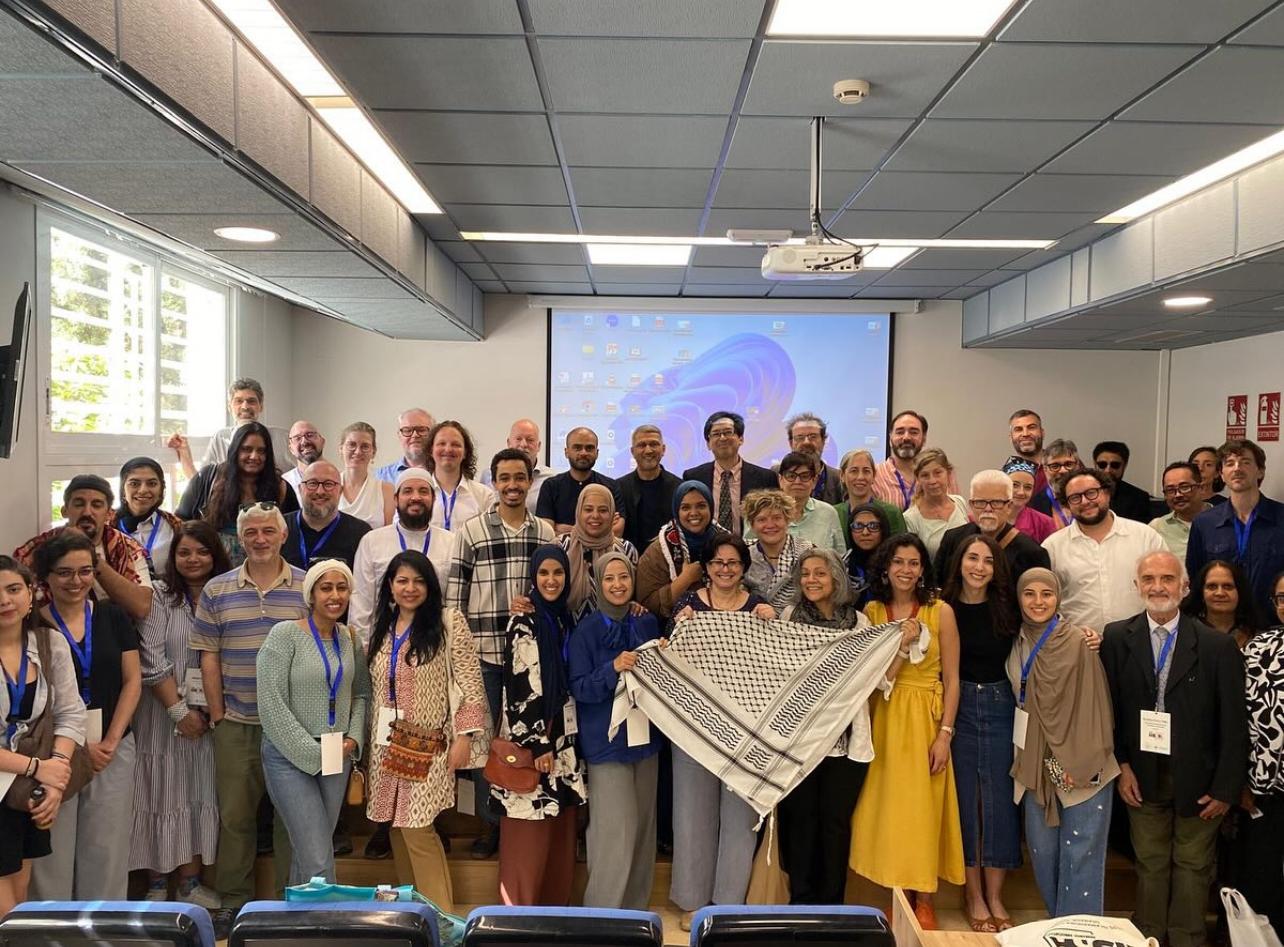
The May 20, 2025the Rector of the Al-Andalusia Islamic University of Spain, Sh. Mohammad Idrissiwas invited to participate in an academic conference organized by IISRA at the University of Granadafocused on the analysis of the Islamophobia and the rise of Islamophobic narratives in the contemporary social context.
Understanding Islamophobia from experience and knowledge.
During his speech, the Rector addressed the phenomenon of Islamophobia from the point of view of the reality of the Muslim community in SpainThe seminar highlighted how certain simplifying and exclusionary discourses have been gaining presence in the public debate. The importance of analyzing not only the visible manifestations of rejection, but also those of the narratives that support itThe social and political roots, and its direct impact on coexistence.
The reflection was approached from an academic perspective, but connected with everyday experience, insisting on the need to generate more complex and human readings of a reality that is often reduced to stereotypes.
The role of the university in the construction of the narrative
The meeting brought together academics, researchers and students interested in exploring the role that educational institutions can play in addressing this phenomenon. In this context, it was emphasized that the university should not limit itself to describing the problems, but should take on a active responsibility in the construction of critical thinkingThe program provides intellectual tools that help to dismantle prejudices and foster a fairer and more contextualized understanding of diversity.
Thinking together to transform
Spaces like this conference allow us to stop, listen and think collectively, moving away from polarization and opting for the informed dialogue and academic rigor as ways to transform the dominant narrative. When the analysis is made from knowledge and listening, real paths towards a more conscious and balanced coexistence are opened.
Al-Andalusia's participation in this academic forum reinforces its presence in university and international debates, and confirms its vocation to contribute, through education and reflection, to a more just, critical and plural society.
 English
  Español